Nathan Segal Art
An Experience of Art School
I'm a self-professed computer geek. Or at least I was. My life changed dramatically when I decided to attend art school. For nearly 30 years I've worked with computer graphics and special effects photography and it has served me well.
But secretly, I felt frustrated with my narrow range of creativity. I was tired of having to work under the direction of an experienced artist, one who understood composition and who knew how to make things work. I envied that person and wanted to be like them, to know why things worked the way they did and how to get high quality results. I thought: “There has to be a better way.”
And so, in Early August of 2000, I signed up for a 3-week studio drawing and painting intensive at the Victoria College of Art. From the brochure, the description read: "For four days each week, students will be involved in-depth in the concepts, materials and processes of drawing and painting. Students will learn the skills and techniques required by both beginning and intermediate students. Like the Six-week Immersion Program, it is an excellent vehicle for creating a portfolio." In retrospect, I couldn't agree more.
Shortly after signing up, I was given a list of the things I would need and a few days later, I was ready to begin, at least in theory. I had no idea of what to expect, and I was more than just a little apprehensive. As it turned out, my first day was to be painting with acrylics. I hadn't touched acrylics since I was 14 in Junior High School, and here I was at the not so tender age of 41, feeling like a kid again.
The Victoria College of Art is housed in a two-story brick building in the old Bank Street school, an edifice that was built around the turn of the century and has seen very little updating since then. It is well loved by the staff and students for its spacious rooms with high ceilings and windows, metal venetian blinds, tile floors and old furniture. Charcoal, ink, pastels, oil and acrylic paint have formed an overall pattern on clothes, walls and floor.
And despite a fresh paint job each year, the building has a well-worn appearance, a place where I felt comfortable getting my hands dirty, in short, the perfect place for an art school.
On our first day of class, nine of us arrived and picked out an easel of our choice, along with a table for holding our paints, palette and containers of water for cleaning our brushes. The instructor was Victor Arcega, a jolly man with a wicked sense of humor and a great understanding of art. Gently, he took us through the basics of color theory, leading us through exercises on mixing colors.
Some of these lessons include information on complementary colors, (colors opposite each other on the color wheel, such as red and green) which colors tend to move forward in painting and which ones recede. We painted different squares with contrasting colors and learned about shades (a color with black added to the paint) and tints (a color with white added to the paint).
We also worked with charcoal, drawing some basic shapes in black and white, including working with the area around objects, commonly referred to as negative space.
In the afternoon of that first day, we began a painting of a still life in black and white then began a color version. By the end of the day, I was tired. My back and legs ached from standing for roughly three hours at a time, painting. But the first day was done, and I was beginning to get into the rhythm of school.
Two days later, we switched to the drawing class. It was here that I experienced a sudden shift in consciousness. Among other things, I realized that I did have some talent. Another important realization was that the main reason I hadn't succeeded in the past was that I was too impatient, and that with consistent effort, I could obtain the results I wanted. Right then, I knew without any doubt that I wanted to be an artist, to draw and to paint. And this was how I wanted to spend the rest of my life.
After my summer course ended, I was intending to sign up for more extension courses when I learned I would get a better deal by taking a few full-time courses. And so, I began my first year of art school, as a part-time student.
On the first day, Robin Mayor, the director, gave us a talk about the importance of meditation and went on to describe the many variations of Samadhi as experienced in daily life. Robin stressed the importance of cultivating a "Painting Samadhi," where we would "come from a place of silence, where time ceases to exist, and the work will take care of itself."
I cannot overemphasize the importance of what he said. If you’re not from a spiritual background or haven’t studied meditation, the word “Samadhi” has little meant. According to Sri Ramana Maharshi, one of the greatest saints of modern India, “Samadhi is where one has a direct experience with the source of all things.”
This is a highly focused form of being, not doing. Over the years I’ve learned meditation practices that allow me to still my mind and to come from a place of silence while working. In this place it seems as if my body is moved by forces outside my control and in this place, it’s almost as if the work creates itself. This has helped immeasurably in all areas of my life. For the artist, it’s an important doorway to creativity.
My first year was filled with experimentation, overcoming mental obstacles, study of different artists and their techniques, and occasionally, flashes of insight and breakthroughs. In upcoming posts, I will write about the many things I learned about art, composition, painting, and drawing.
Lessons of Painting
• Warmups Loosen you Up Often, we would start the day with some quick drawing/painting exercises as way of loosening up. Gesture drawing was one of these warmups, a technique of drawing very quickly, without having time to think, which was helpful for turning off the logical mind.
• In my studies prior to art school, I came upon a book by Betty Edwards, "Drawing on the Right Side of the Brain." Like my teachers, she worked with several approaches to get the student to make a mental shift and draw from the creative part of the mind. One of these techniques was turning a photograph or drawing upside down and then creating a copy of it. This radically changed my approach - and my results.
• Another technique was to focus on drawing the shadows, rather than the overall image. And in art school, we learned about drawing the form. The result was that the lines and shape would emerge because of drawing the form.
• When drawing/painting, we learned to work with the entire surface, to constantly keep moving from one area to another and not to focus too much on one area.
• Hand in hand with the above concept is the importance of Negative Space. Often, we would find ourselves working with only the image in the foreground and ignoring the area around it. The Negative Space is equally as important as the foreground. If we concentrated on drawing the negative space, the foreground would begin to emerge.
• Other issues have to do with proportions, such as how to transfer the likeness of a model to canvas. Here, one can use various forms of measurement such as the use of grids. But ultimately, the task was to “learn how to see,” so that we could get the proportions to work properly without using these devices. “Learning to see” is a mental shift and it will only become apparent at some point in your development; no one can say for sure when it will happen, but when it does, the way you approach art will change – hugely.
• When painting, we were told to use a big brush for the most part. Why? Because it forces you to make a statement and it also covers the surface faster than a small brush. Using a small brush early on can lead to working with details too soon in the work.
• It was also important to have a good bit of distance from your work, to hold the brush from the end of the handle and with the hand up and the elbow down, close to the body. This allows for greater relaxation and endurance when painting all day. Painting closely to the surface was considered a mistake, partly because the closer you get, the harder it is to see if the composition is working.
Alexis, my painting instructor, worked hard to break us of this habit. In one case, she walked around the room with a 6 foot paddle and stick. Anyone caught painting too close to the surface had their brush taped to one end of the stick and was told to hold the opposite end and paint. So much for being in control!
• We learned the importance of stopping and standing back from our work, at least ten feet or further. Often, something that didn't appear to work when viewed from up close came together when viewed at a distance.
• Alexis encouraged us to "Go big," to paint on a large canvas. She told us that painting on a large scale would allow the composition to breathe, something that could prove difficult if the surface was too small.
• Alexis was always pushing us to break through our self-imposed barriers and hidden resistance. Sometimes, it could be easy or sheer torture. But when there was a breakthrough, the results could be spectacular. A case in point was with one woman who painted in a stylized way.
One day, she gave into the process, with the result was that she painted a wonderful piece of work. What's more, she was the only student that day to complete her painting.
• If we became blocked with a process, we were advised to leave the work alone for a day or two or even longer. Then when we would return, we could see the work from a fresh perspective and often the solution would fall into place.
• We were often told not to try to be perfect, as it would create much unnecessary pressure. Screwing up was not viewed as a failure, but as an opportunity to learn something. A case in point was when I attempted to create an entire oil painting using just the palette knife. Well, the result was a disaster. I hated the surface, the palette knife, the oil, everything.
To make matters worse, I had picked a highly complex perspective as well. Nothing worked and I broke the board half in frustration and almost quit that approach. But, with some encouragement, I tried again and succeeded.
Other Observations
Over time, I began to realize that there was a wisdom to the process and that it was important to trust in that, even if I didn't know where I was going. The other thing I learned was to have faith in my work. On virtually every composition, I don't know if it's working until I'm at either the halfway point or further. It is only then that I can see if the colors, shapes, etc. are coming together or not. And at this stage, sometimes the smallest change could make a huge difference.
Computers and Design
• Over the course of this year, it became very clear to me that the computer, while an excellent tool, cannot substitute for a proper understanding of the fundamentals of art and design. Without this, you are handicapped.
• Equally important is to know when to use the computer and when to turn it off. A case in point was an experience I had at Hanna-Barbera a few years ago. There, a background artist would draw out his background scenes entirely, using black and white line drawings which would be scanned into the computer and using Photoshop, he would fill in the colors and shading.
• As an artist, one of my passions is Space Art. Before art school, I would have attempted to create almost everything on the computer, a time-consuming task. Now, I would rather create background scene entirely by traditional painting. For the spacecraft, I prefer to use models that I can photograph, or 3D models. From there, all the photographs are scanned and brought into 3D applications and Photoshop, to complete the composition and apply finishing touches.
• The value of traditional drawing/painting cannot be underestimated. The relationship between an artist and the materials is very important. On the level of feeling, there is the touch, surface, texture, smell, etc. A computer screen can only give back so much. For example, iridescent colors are difficult to simulate on a computer screen. But a real life representation lets you know exactly what you are dealing with.
Parting Observations
The challenge is to find a balance between natural media and machines, to know where one stops and the other carries on. For some applications, there is no contest, such as CAD/CAM, video editing, 3D animation, etc.
To ease the transition from traditional techniques to the computer, certain programs exist, such as Painter and Alias SketchBook Pro, that let you use drawing tablets and a variety of pens to simulate the environment of using brushes. For artists who find the tactile experience too important to leave behind, you can simulate a drawing or painting surface with a drawing tablet, by placing a piece of textured cloth or paper on the surface to simulate the feeling of drawing/painting.
The only down side is that the stylus might skip, and produce some irregularities onscreen. Another option is using an LCD drawing tablet, that allows you to look at the screen and draw/paint on it at the same time, much like working on a canvas or sheet of paper.
For many of us, there comes a time when the computer and what it offers cannot be dismissed. To be a fully versatile artist, one needs to consider the benefits of computer graphics and how it can enhance your professional/personal life. There are some who say that the art produced by digital means has great value in its own right, and this is true.
Equally so, there are some who devalue the digital art forms partly due to the perception that working digitally is "too easy," and "not true art." But this is not true. Every art form has value intrinsic to itself. No one discipline is necessarily better than another, just different.
For me, the appeal of the traditional approach is greatly valued. There is something special about being able to view the direct application of paint/ink/pencil, etc. directly on a drawing surface. There is an important connection between the artist and the surface being worked on. There is also the smell of the paint, the different sensation of paint texture, such as the buttery sensation of working with oil paints, or sand mixed with pigment, etc.
If you're a creative professional who has been feeling restricted by your knowledge and understanding, I urge you to take a few courses. They will help to expand your creativity and will likely open new doors to creative expression that you never knew existed.
Written by:
Nathan Segal
SHARE


About me
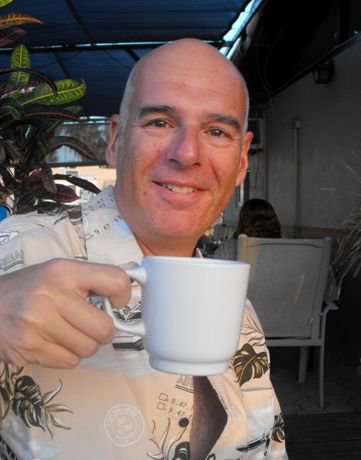
Hi there 👋 My name is Nathan Segal, I'm the creator of This Blog. Here, you can view my portfolio and read my articles which are all about art and tutorials


Created with ©systeme.io